


Dental Implants: Restore Your Smile with Lasting Results

Losing one or more teeth can affect not only your appearance but also your mouth's function. Dental implants are a modern, effective solution to restore your smile and regain your quality of life. At Dr. Sabrinsky Flores's clinic, we evaluate each patient's oral rehabilitation options and explain their benefits, risks, and maintenance.
1. What are dental implants?
The dental implants are titanium devices designed to replace the roots of missing teeth. They serve as a foundation for crowns, bridges, or complete dentures, offering a stable, aesthetic solution.
Osseointegration process: Titanium, the material implants are made from, fuses with the jawbone in a biological process that ensures the implant's stability.
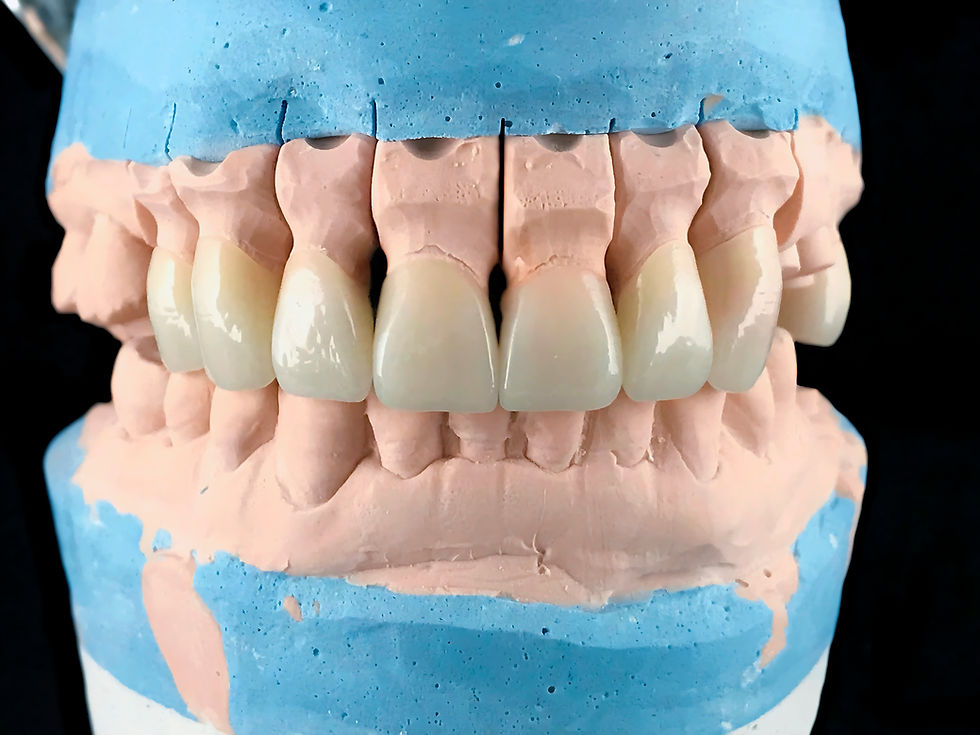
Customized design: The crowns placed over implants are custom-made to look and function like natural teeth.
2. Benefits of dental implants
Dental implants are not only an aesthetic solution; they also offer multiple functional advantages:
Bone preservation: By replacing the tooth root, implants can help limit bone loss, but they need follow-up.
Stability and durability: Longevity varies; neither an implant nor its restoration is guaranteed to last a lifetime.
Natural appearance: Implants look and function like real teeth, restoring a perfect smile.
Improved quality of life: They restore the ability to chew and speak confidently.
Simple maintenance: Implants require the same care as natural teeth: brushing, flossing, and regular dental visits.
3. Who is a candidate for dental implants?
Most people who have lost one or more teeth may be candidates for implants, provided they meet certain requirements:
Appropriate oral health: Healthy gums and no advanced periodontal disease.
Sufficient bone: There must be enough bone to support the implant. In cases of bone loss, a graft may be performed before treatment.
Commitment to oral hygiene: Hygiene and checkups support maintenance; they do not eliminate the risk of complications.
Dr. Sabrinsky Flores performs a thorough evaluation to determine whether you are a candidate for this treatment and will guide you through each step of the process.
4. What is the process for placing a dental implant?
Dental implant treatment consists of several carefully planned stages to ensure its success:
Initial consultation: Evaluation of oral health and treatment planning. X-rays and, in some cases, CT scans are used to design the plan.
Implant placement: In a surgical procedure, the implant is inserted into the bone. This is performed under local anesthesia to ensure comfort.
Healing and osseointegration: Integration may take several months or longer; the timeframe is determined by clinical progress.
Prosthesis placement: Once integration is complete, the crown, bridge, or prosthesis is attached to the implant.
5. Care after dental implants
To care for your implants and their supporting tissues, follow your dentist's instructions:
Oral hygiene: Brush your teeth after every meal and floss daily.
Regular dental visits: Checkups allow the implant to be examined and problems in its supporting tissues to be detected.
Avoid tobacco: Smoking can affect healing and increase the risk of implant failure.
A balanced diet: Maintain a nutrient-rich diet to promote bone and oral health.
6. Questions for planning your oral rehabilitation
Before deciding, ask for an explanation of the evaluation, alternatives, and treatment sequence. The plan should distinguish implant placement from the crown, bridge, or prosthesis that will be supported by it.
Planning: What studies and stages are proposed for your case?
Prosthesis: Is a crown, bridge, or complete denture proposed, and why?
Follow-up: How are checkups scheduled, and what maintenance is anticipated?
Implants may develop infection, fail to integrate, or injure nearby structures. Consult your dentist immediately if the implant moves or hurts.
Educational notice: this content offers general information and does not replace an individual dental evaluation. Diagnosis and treatment must be determined after a professional assessment.

Comments