


Hyperdontia: what a published case of 81 teeth teaches us
Narrated by Dr. Sabrinsky Flores
Hyperdontia: what it means to have extra teeth
Have you been told that you or your child has an extra tooth? Understanding what that means can help you talk with the dentist. We begin with a case published by other professionals, unrelated to our clinic, and then explain what questions are useful to bring to your consultation.
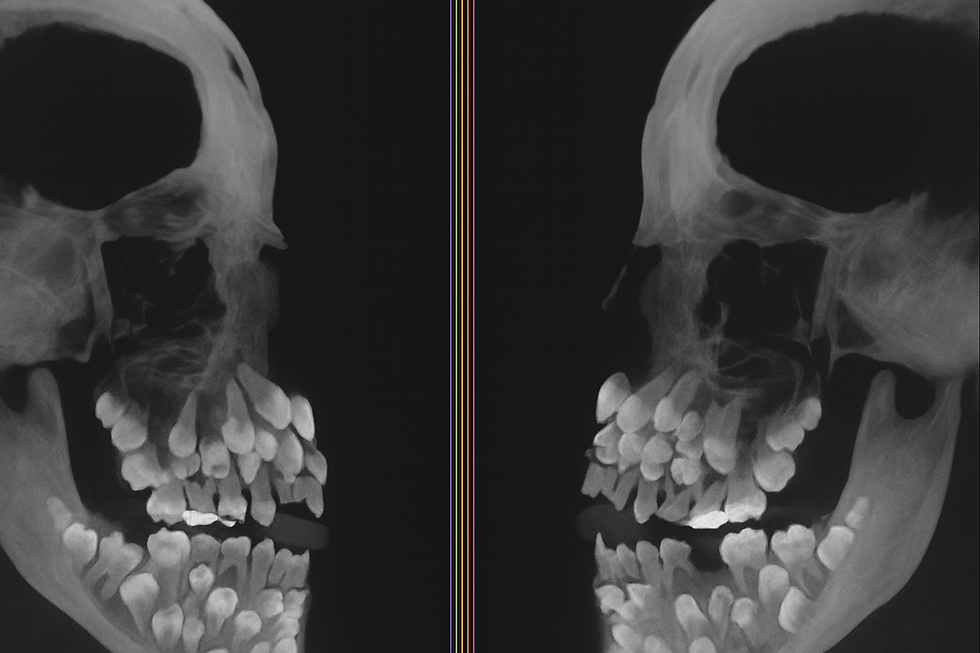
In 2011, Pereira and colleagues published the case of a female patient aged 11 years and 8 months with 81 recorded teeth.
The count included 18 primary teeth, 32 permanent teeth, and 31 supernumerary teeth. The report also described a pericentric inversion of chromosome 9 following a genetic evaluation. That finding does not allow us to attribute a cause here or conclude that a syndrome is present or absent. The authors noted the need for multidisciplinary care.
As a dentist in Santo Domingo, my goal is for families to understand the diagnosis and participate in decisions. Care is organized around the person: their questions, needs, and ability to attend follow-up, not how striking a number may seem.
What is hyperdontia?
The condition hyperdontia is a dental developmental anomaly in which one or more additional teeth appear, known as supernumerary teeth. A complete primary dentition has 20 teeth, and a permanent dentition can have up to 32, counting wisdom teeth. During the transition, primary and permanent teeth coexist; counting them at home is not enough to establish a diagnosis.
Extra teeth can affect each person differently. During the evaluation, aspects such as the following are reviewed:
The bite
Space and crowding
Pain or discomfort
Eruption of permanent teeth
The position of the teeth
Comfort when chewing or speaking
The starting point is a dental evaluation. You can ask for an explanation of what was found and what the next step would be, without assuming that an extra tooth means immediate surgery is needed.
How are supernumerary teeth evaluated?
The evaluation considers the clinical history, examination, and development of the dentition. Some teeth may remain unerupted. When images are needed, they help establish their location and relationship with nearby teeth. The number of teeth does not determine treatment on its own.
The ADA recommends selecting X-rays according to individual needs after the clinical examination. There is no automatic indication for a panoramic X-ray simply because a person reaches a certain age. Before a test, ask what information it will provide and mention whether you have previous images that might be useful.
Does an extra tooth always have to be extracted?
Not all cases require the same intervention. Planning should consider the type of tooth and stage of development. The dentist will assess the appropriate follow-up or treatment and whether other professionals should participate.
To understand a proposal, ask what the goal is and what alternatives exist. For example: is the aim to help another tooth erupt, correct its position, or monitor its progress? Ask for an explanation of what would change if observation were chosen before intervention.
If an extractionis recommended, request an explanation of its benefits, risks, and aftercare. It is useful to know who will perform the procedure, how the patient's comfort will be managed, and whom to contact if a question arises during recovery.
If corrective orthodontic treatmentis also proposed, ask how it will be coordinated with the other phases. Request a clear plan of visits and checkups, and confirm which aspects may be adjusted according to progress.
How to prepare for your consultation
Write down when you noticed the change, whether there is discomfort, and which questions you want answered. Bring available previous studies and information about earlier treatments. If accompanying a child, explain simply that the visit will be an opportunity to check their mouth and talk.
Identify your main question. It may concern the diagnosis, care options, or follow-up.
Ask for the plan to be explained. Ask what will be done first, why, and which decisions can wait.
Confirm the next step. Clarify when to return and how to communicate new discomfort or questions.
When is it worth consulting?
A question about a tooth's eruption or position is worth discussing at a consultation. These observations can guide the conversation, but do not confirm hyperdontia on their own:
A primary tooth remaining while others have already been replaced
Dental crowding
Differences in eruption between the two sides
Swelling that keeps returning
Discomfort when chewing or speaking
Changes that raise questions about the bite
At our Santo Domingo clinic, you can request an evaluation to discuss your symptoms or questions. We will explain the findings, options, and whether another assessment is needed. Clear information is the first step toward deciding with peace of mind.
Frequently asked questions about hyperdontia
Is having extra teeth dangerous? It can interfere with the eruption or position of other teeth, but not every situation has the same severity. The evaluation helps guide management.
Can it be prevented? Detection is not the same as preventing its formation. Checkups allow dental development to be reviewed and help determine whether follow-up or treatment is needed.
Can it be detected in adults? Yes. It can be detected in childhood or adulthood. Discuss your questions with the dentist even if it has never been mentioned to you before.
Written by Dr. Sabrinsky Flores
General Dentist – Santo Domingo
Dental educator with a passion for preventive oral health.
Sources: Pereira and colleagues, case published in 2011; AAPD, development of the dentition (2024 revision); ADA, individual indications for X-rays.
Educational notice: this content provides general information and does not replace an individual dental evaluation. Diagnosis and treatment should be determined after a professional assessment.


Comments